The Day Napoleon Was Routed by Rabbits
How a catastrophic planning mistake turned history's greatest military genius into the laughingstock of his own victory party — and why nobody talked about it for 88 years.
Key Facts
- In July 1807, Napoleon organized a celebratory rabbit hunt after signing the Treaties of Tilsit — one of his greatest diplomatic triumphs.
- Chief of Staff Alexandre Berthier sourced **1,000–3,000 rabbits** from local farmers — buying tame domestic rabbits instead of wild hares.
- Domestic rabbits associate humans with food. When released, they didn't flee — they **swarmed toward Napoleon** looking to be fed.
- General Thiébault's memoirs record that the rabbits 'piled themselves up between his legs till they made him stagger' — the conqueror of Europe was **physically overwhelmed**.
- The incident was reportedly **kept secret for nearly 90 years**, finally emerging in Thiébault's posthumously published memoirs in 1895.
- Historians believe the rabbits may have been deliberately kept hungry before the hunt — accidentally making them even more food-desperate and aggressive toward humans.
The Most Improbable Defeat in Military History
On the morning in question, Napoleon Bonaparte was at the absolute peak of his power. He had just concluded the Treaties of Tilsit, the diplomatic masterpiece that ended the War of the Fourth Coalition and effectively gave him dominion over continental Europe. Russia had been humbled. Prussia had been dismembered. Napoleon — who had risen from obscure Corsican artillery officer to Emperor of the French and master of Europe in barely two decades — had no peers left to defeat.
And so, to celebrate, he went rabbit hunting.
What happened next was witnessed by dozens of France's most senior military officers, members of the imperial court, and assorted dignitaries. It was so embarrassing that those present were reportedly sworn to silence. It would not reach the written historical record for nearly nine decades. And even today, over 200 years later, it remains one of the most deliciously absurd true stories in the annals of European history: the greatest general of his age, routed, physically overwhelmed, and forced to flee — by a mob of hungry domestic rabbits.
The rabbits won. Napoleon retreated.
The Greatest Victory You've Never Heard Of
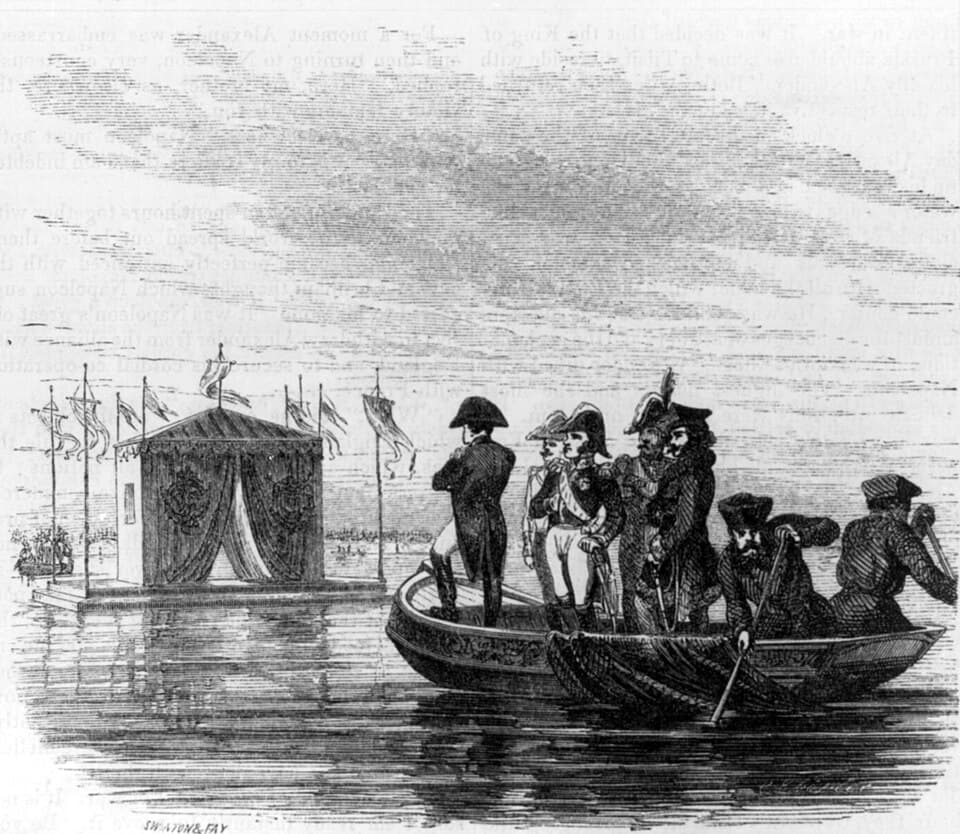
To understand just how absurd the rabbit incident was, you need to appreciate what Napoleon had just accomplished. The Treaties of Tilsit — signed on June 25 and July 9, 1807, on a specially constructed raft in the middle of the Niemen River — were among the most consequential diplomatic agreements of the Napoleonic era.
In the preceding year, Napoleon had crushed Prussia at the twin battles of Jena and Auerstedt in October 1806, destroying an army that had been considered among the finest in Europe. He then marched through Poland and faced the Russian army at the grinding, bloody Battle of Eylau in February 1807, before delivering a decisive blow at Friedland in June. Tsar Alexander I, badly beaten and anxious to negotiate, met Napoleon on that famous raft in the river — an extraordinary scene, a private meeting between the two most powerful men on earth, floating alone in the middle of a neutral waterway.
The resulting treaties reshaped Europe. Russia acknowledged French dominance over western and central Europe. Prussia lost half its territory and was reduced to a satellite state. Napoleon created the Kingdom of Westphalia for his brother Jérôme and the Duchy of Warsaw, rearranging the map of a continent as if it were a puzzle. He was 37 years old.
This was the triumph that the rabbit hunt was meant to celebrate. A victory so complete, so sweeping, that Napoleon apparently felt he could afford a little leisure. He was wrong, in ways he could not possibly have foreseen.
The Chief of Staff Who Did Not Know His Rabbits
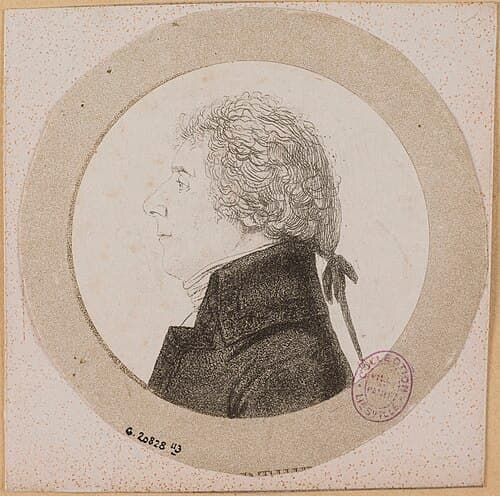
Louis-Alexandre Berthier was arguably the most important man in Napoleon's army who wasn't Napoleon. As Chief of Staff and Minister of War, he was the administrative genius who translated Napoleon's sweeping strategic vision into the meticulous operational orders that made the Grande Armée function. Napoleon reportedly said he could replace any of his marshals — but not Berthier. He was that indispensable.
Berthier organized the celebratory hunt on a piece of his own land, delighted and honored that the Emperor had accepted the invitation. He spared no effort. The event was to be grand, fitting for the occasion: a proper rabbit hunt in the old aristocratic tradition, with Napoleon and his senior officers and dignitaries assembled for an afternoon of sport.
The only problem was the rabbits.
Wild rabbits, or rather wild hares, were the traditional quarry of such hunts. They were fast, erratic, terrified of humans, and would scatter convincingly when driven from their warrens — making for exciting sport. But sourcing them in large numbers was difficult. Berthier needed hundreds, possibly thousands, and he needed them promptly. The solution seemed simple enough: buy tame rabbits from local farmers.
What Berthier did not understand — what apparently none of his staff understood — was that this was an entirely different animal in terms of behavior, even if it looked identical. He was, as one account puts it, 'not aware that there could be any difference between one rabbit and another.'
The Behavior of Hungry Things
There's a secondary detail that makes the story even better: the rabbits may have been deliberately kept hungry before the hunt. This was apparently a common practice — you wanted the rabbits active and energetic for the hunt, and a slightly hungry animal moves more than a well-fed one. The exact accounts differ on whether this was intentional or accidental, but multiple sources suggest the rabbits had not been fed that morning.
Picture the scene from the rabbit's perspective. You are a domestic rabbit. You have lived your entire life in a hutch. Every morning, a large bipedal mammal appears and puts food in front of you. Today, instead of your morning meal, you were placed in a sack or cage, transported in a somewhat alarming fashion, and then deposited in an open field. You are hungry. You look up. There are hundreds of large bipedal mammals standing right there. These are, by every instinct you possess, the things that bring food.
You advance toward them. And so did approximately one thousand of your closest companions.
The guns fired. The beaters moved forward. And instead of a satisfying scattering of panicked hares into the underbrush, the rabbits simply... came closer. And then they kept coming. And then, as the assembled party stared in baffled disbelief, the rabbits reorganized themselves — whether by accident or some unfathomable collective rabbit logic — and began to converge on the one figure at the center of the field: the Emperor of the French.
The Emperor Retreats
The primary eyewitness account of what happened next comes from the memoirs of General Paul Charles François Adrien Henri Dieudonné Thiébault — a general who fought across Napoleon's campaigns and was present at the hunt. His description, published posthumously in 1895 from the original manuscript by his daughter, is the richest account we have of the incident.
Berthier, apparently in a panic, organized the coachmen into an impromptu defensive line, arming them with their long riding whips to beat the animals back. It didn't work particularly well. Other accounts describe Napoleon's own entourage wading in, trying to redirect the tide of fur. Nothing worked. The rabbits were not frightened by noise, by movement, or by the presence of France's greatest military minds. They wanted food, and they had decided Napoleon had it.
Eventually, Napoleon was escorted — one imagines with some urgency and no small amount of undignified haste — to his carriage. The rabbits, reportedly, followed him there too, clustering around the wheels as if staging a protest. Only when the carriage finally moved did the assault begin to subside.
Napoleon drove away. The rabbits remained in possession of the field.
The intrepid rabbits turned the Emperor's flank, attacked him frantically in the rear, refused to quit their hold, piled themselves up between his legs till they made him stagger, and forced the conqueror of conquerors, fairly exhausted, to retreat and leave them in possession of the field.
— General Paul Thiébault, Mémoires du général Bon Thiébault (published 1895)
Why Nobody Talked About It (For 88 Years)
Here's where the story gets genuinely interesting from a historical-methodological perspective. The incident, despite occurring in front of dozens of witnesses, essentially disappeared from the historical record for nearly nine decades. Why?
The most commonly cited explanation — and it has the ring of truth — is that those present were effectively sworn to silence. Napoleon's image was of enormous political importance. He was not merely an emperor; he was a symbol, a projection of invincibility and rational mastery over chaos. The image of him being physically overwhelmed and driven into retreat by a mob of farm rabbits was not compatible with that brand.
This tells us something interesting about how historical records are made. We know about Austerlitz and Waterloo because the outcomes — one gloriously victorious, one catastrophically defeated — served someone's narrative purposes. Intermediate embarrassments, the ones that served nobody's interests, tended to be quietly buried.
Thiébault himself died in 1846, and his memoirs sat in manuscript form for decades before his daughter arranged their publication in 1895. The rabbit incident appeared in that publication, almost 90 years after the fact. By then, Napoleon had been dead for 74 years, and the story could be told without political consequence.
It's worth noting that Thiébault was not always the most reliable narrator. He had a reputation for embellishment and was not always on good terms with his superiors. It's possible — just — that the story is exaggerated. But the core incident is corroborated by enough contemporary sources and fits sufficiently well into what we know about animal behavior that most historians accept it as essentially true, even if the more theatrical details may have been seasoned to taste.
What the Rabbits Actually Teach Us
Beyond the obvious comedy — and it is genuinely funny, one of the funniest true stories in the Napoleonic period — the rabbit incident illuminates a few things worth thinking about.
First, it's a small but perfect illustration of the difference between wild and domesticated animals. We often think of domestication as simply 'taming' — making animals less dangerous, more docile. But what domestication actually does is fundamentally rewire the animal's behavioral relationship with humans. A wild rabbit sees a human and flees. A domestic rabbit sees a human and approaches. These are not variations on a spectrum. They are opposite behaviors. Berthier's failure to understand this distinction cost Napoleon an afternoon and a significant chunk of his dignity.
Second, it's a reminder that even the most meticulous planning systems fail at their edges. Berthier was, by all accounts, one of the greatest military logisticians in history. He ran Napoleon's staff with exceptional competence for decades. And yet he sourced the wrong kind of rabbit. Expertise in one domain does not transfer automatically to adjacent domains — a truth that remains relevant in every field.
Third, and perhaps most interestingly, it tells us something about the sociology of power and historical memory. The incident was covered up, then emerged from a single memoir source, and has been repeated and embellished for two centuries. We cannot know exactly what happened in that field in July 1807. What we know is that something happened — something embarrassing enough to suppress, memorable enough to record, and funny enough to survive.